What Is a B2B Case Study? A Complete Guide for Businesses
What Is a B2B Case Study? A Complete Guide for Businesses
If you’ve ever visited a company website or researched a new business service, you’ve probably come across a section called Case Studies or Customer Success Stories.
But what exactly is a B2B case study, and why do so many successful companies invest in creating them?
In this guide, we’ll explain what a B2B case study is, why it matters, what it should include, and how it can help you generate leads, build trust, and win new business.
What Is a B2B Case Study?
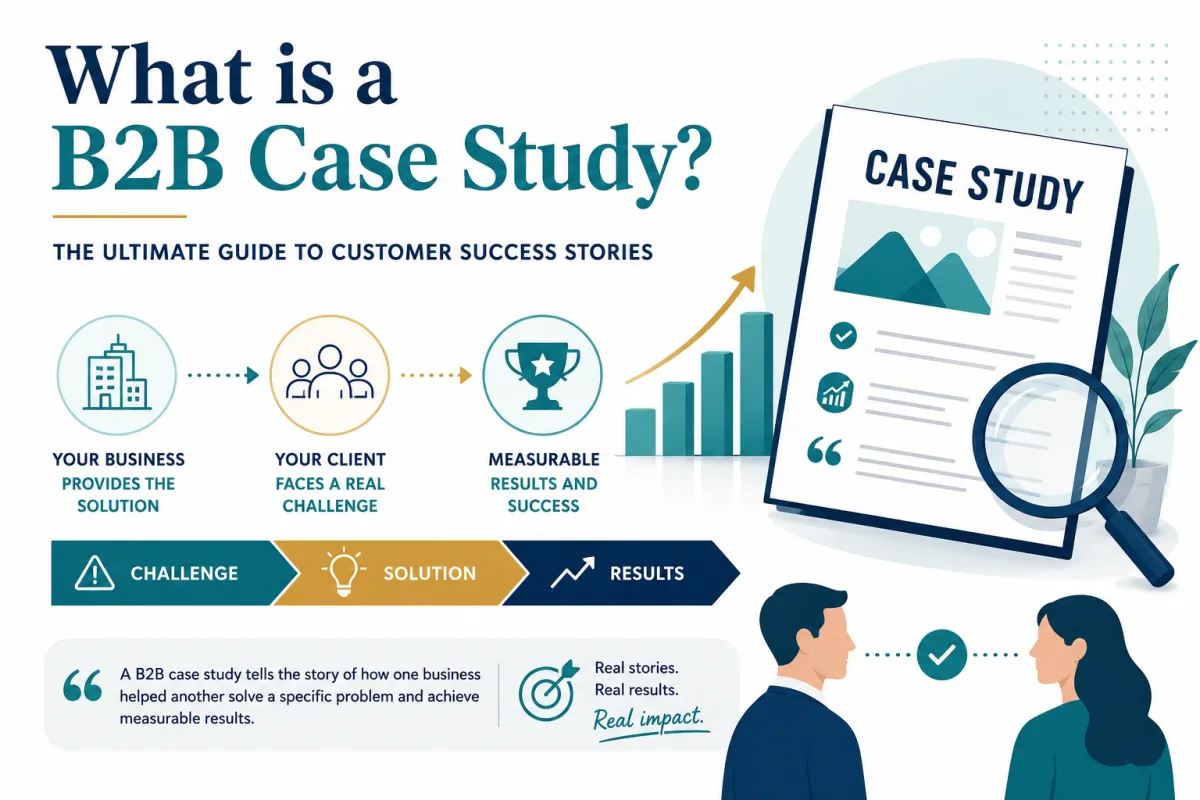
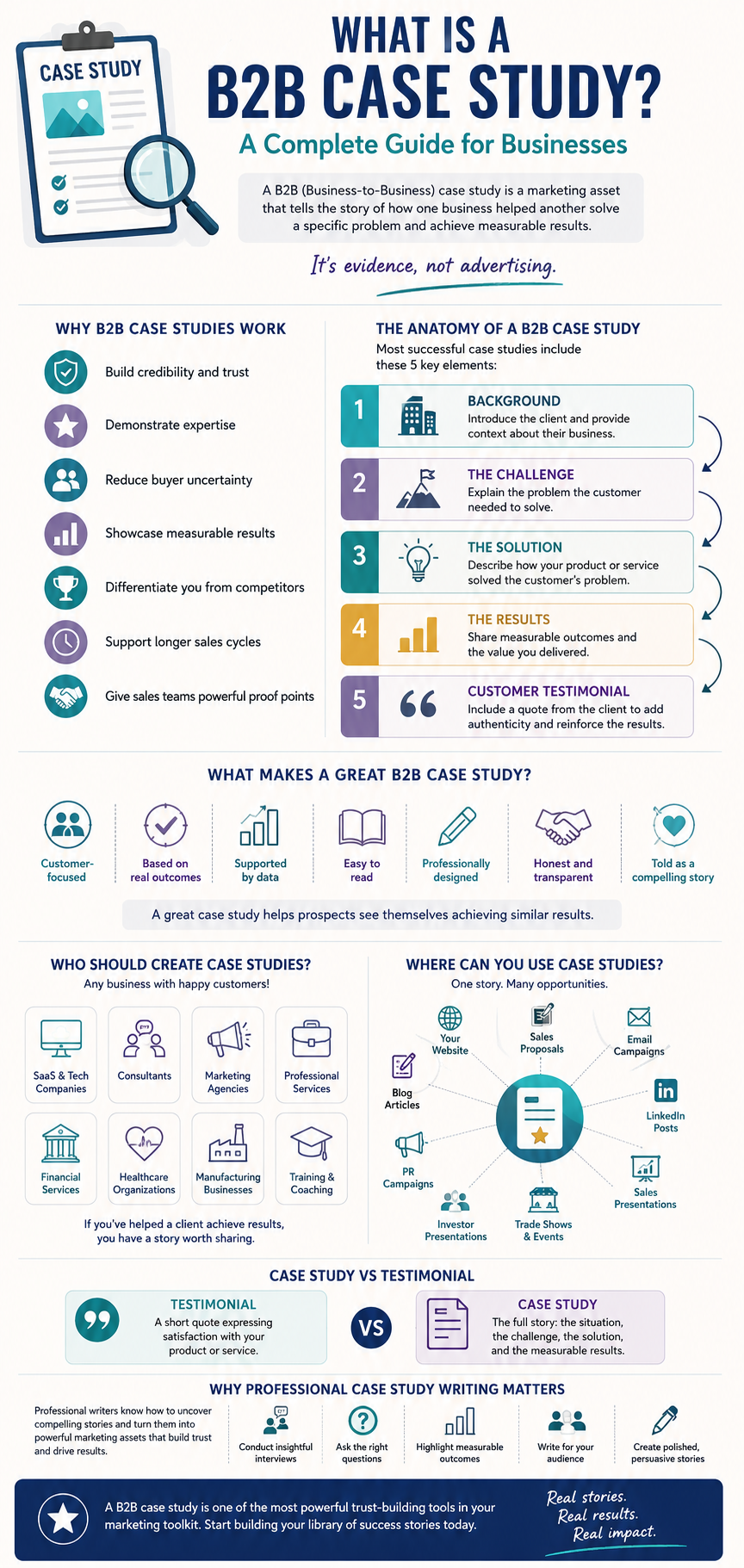
A B2B (Business-to-Business) case study is a marketing asset that tells the story of how one business helped another solve a specific problem and achieve measurable results.
Rather than making claims about your products or services, a case study allows your customers to tell the story for you.
In your customer’s words, a case study tells the story of the challenges your client faced, the solution you provided, and the results achieved. It also shows how the project was delivered and the value your business created for your client.
It provides evidence of your work and the benefits you provide in your customers' own words. It is often more effective than advertising alone.
Why Are B2B Case Studies So Effective?
Buying decisions in the B2B world often involve significant investments, multiple stakeholders, and lengthy sales cycles. Prospective customers want reassurance that they’re making the right decision.
A well-written case study provides real-world examples of your work and reassures potential clients about your capabilities.
Case studies help businesses:
Build credibility.
Demonstrate expertise.
Reduce buyer uncertainty.
Showcase measurable outcomes.
Differentiate themselves from competitors.
Support longer sales cycles.
Give sales teams valuable proof points during conversations.
Instead of simply saying you’re the best, you’re showing exactly how you’ve delivered results for businesses like theirs.
What Should a B2B Case Study Include?
Although every business is different, most successful case studies follow a similar structure, with five core sections.
1. Background
This section introduces the client and provides context about their business. It doesn’t need to be lengthy; a simple paragraph with enough information for readers to understand who the customer is and the industry they operate in.
2. The Challenge
Explains the problem the customer needed to solve before you started working with them.
It may be that they wanted to:
Improve efficiency
Increase revenue
Modernise outdated systems
Reduce costs
Improve customer experience
Save time
The more relatable the challenge, the easier it is for prospective customers to identify with the story.
3. The Solution
This section describes how your product or service solved the customer’s problem and focuses on the approach taken, implementation, key features, and collaboration with the client.
The solution section does not need to go into excessive technical detail unless your audience expects it. It’s best to have a separate white paper or datasheet for the technical details if required.
4. The Results
The outcome or results section of your case study is arguably the most important part. It demonstrates the value your service has provided for your customer.
Ideally, this should include measurable or quantifiable metrics. However, this is not always possible if it was not built into the project from the start.
Specific, measurable outcomes such as these would be ideal in a case study:
Percentage increases
Revenue growth
Time savings
Cost reductions
Productivity improvements
Customer satisfaction scores
Specific numbers add credibility and make the story more persuasive.
5. Customer Testimonial
Including a quote from the client adds authenticity and reinforces the results you’ve described.
Testimonials help readers connect with the human side of the story and provide independent validation of your work.
What Makes a Great B2B Case Study?
The strongest case studies are:
Customer-focused rather than company-focused
Based on real outcomes
Supported by data
Easy to read
Professionally designed
Honest and transparent
Written as a story rather than a sales brochure
A great case study helps prospective customers picture themselves achieving similar results.
Who Should Create B2B Case Studies?
Case studies are valuable for businesses of all sizes and industries, including:
SaaS companies
Technology providers
Consultants
Marketing agencies
Professional service firms
Financial services
Healthcare organisations
Manufacturing businesses
Recruitment agencies
Training providers
Any business with happy customers has stories worth sharing and should create case studies to show the impact of their work.
How Are B2B Case Studies Used?
Many businesses underestimate how versatile case studies can be.
Once you’ve created one, it can be repurposed across your marketing channels, including:
Your website
Sales proposals
Email campaigns
LinkedIn posts
Sales presentations
Trade shows
Investor presentations
PR campaigns
Blog articles
Customer onboarding
One customer success story can support your marketing for months—or even years.
Case Study vs Testimonial: What’s the Difference?
Although both build trust, they serve different purposes.
A testimonial is usually a short quote expressing satisfaction with your product or service.
A case study goes much further by explaining:
The client’s situation
The problem they faced
The solution delivered
The measurable results achieved.
Think of testimonials as snapshots, while case studies tell the full story. Adding customer quotes and testimonials makes your case study much stronger. Your prospective clients can see at a glance what your past clients say about your work.
Why Professional Case Study Writing Matters
Many businesses struggle to create effective case studies because they’re too close to their own work.
Professional case study writers know how to:
Conduct customer interviews to draw out the impact of the work.
Uncover compelling stories to highlight the benefits.
Ask the right questions to bring out the details.
Map details to clear business benefits.
Highlight measurable outcomes and results.
Write in a way that resonates with the target audience.
The result is a polished marketing asset that builds trust and supports your sales efforts long after the project has finished.
Final Thoughts
A B2B case study is more than a customer story. It’s one of the most powerful tools for building trust in your marketing toolkit.
By showing real-world success, case studies help prospective customers understand not just what you do, but the difference you can make to their business.
A well-crafted case study can help shorten the sales cycle, strengthen credibility, and turn interest into enquiries.
If your business provides software, consulting services, marketing expertise, or professional services, and hasn’t started building a library of customer success stories yet, now is the time to begin.
Ready to Create More Powerful Customer Success Stories?
If you’d like help turning your client successes into compelling marketing assets, I offer professional B2B case study writing services that showcase your results, build credibility, and support your sales process. Let’s turn your best results into stories that win more business.